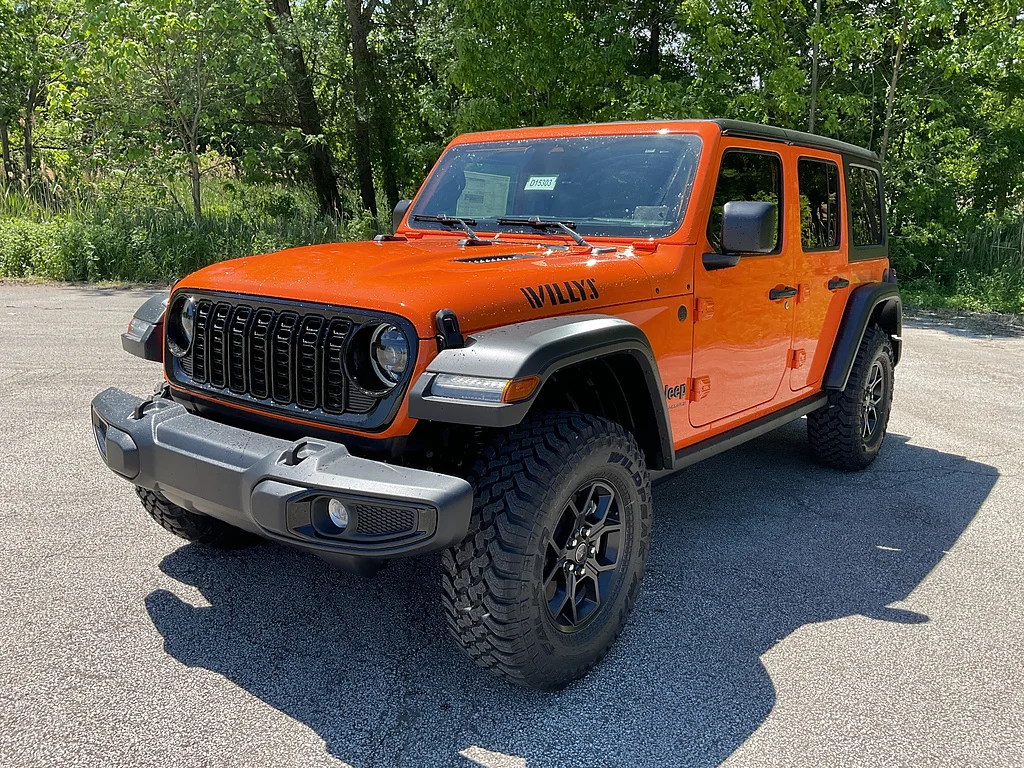
Quick verdictChoose a Wrangler if open-air driving and weekend adventures matter to you. If you mostly want a quiet, efficient commuter, a road-focused SUV may suit you better.
Jeep Wrangler Buyer Guide
Is the Jeep Wrangler Good for Daily Driving and Weekend Adventures?
Is the Jeep Wrangler good for daily driving? For the right driver, yes. You get a removable top, real four-wheel drive and serious trail ability, plus enough comfort for the drive to work. The trade-offs are more road noise, a firmer ride and lower fuel economy than a typical crossover.
A Jeep Wrangler daily driver works well for people who value fun and capability as much as comfort. Modern Wranglers offer a 12.3-inch touchscreen, available adaptive cruise control and a choice of turbocharged or V6 power. Still, Jeep built it for trails first. Its boxy shape, solid axles and off-road tires bring more wind noise and a less planted feel on the highway than most crossovers.
In short
Love open-air driving and weekends outdoors? The Wrangler can be a rewarding daily driver. Want a quiet, efficient commute above all? Test-drive it on the highway before you decide.
Key takeaways
2.0L turbo or 3.6L V6 on most trims, 8-speed automatic available
Up to 21 mpg combined (EPA est., 2.0L turbo)
Every Wrangler has four-wheel drive, with 9.7 to 10.8 inches of ground clearance on core trims
Two-door is easier to park; four-door seats five and carries more
A highway test drive will tell you more than any spec sheet.
At Classic Chrysler Dodge Jeep RAM, checked this guide against Jeep’s published 2026 Wrangler specifications on 28 October 2026. We built it around the questions Northeast Ohio drivers ask us most.
Reviewed by: CDJR Team
Last updated: 28 October 2026
Page specific highlights
Jeep Wrangler Quick Facts: Two-Door vs. Four-Door
Feature
2026 Wrangler 2-Door
2026 Wrangler 4-Door
Seating
4
5
Overall length
166.8 in.
188.4 in.
Turning diameter
32.7 ft
38.8 ft
Cargo behind rear seat / rear seat folded
About 13 / 32 cu. ft.
31.7 / 72.4 cu. ft.
Engines
3.6L V6 (285 hp) or 2.0L turbo (270 hp), by trim
3.6L V6 or 2.0L turbo by trim; 6.4L HEMI V8 (470 hp / 470 lb-ft of torque) on Moab 392
3,500 lbs; up to 5,000 lbs (Rubicon with 4.10 axle ratio and automatic)
Four-wheel drive
Standard
Standard
Specifications come from Jeep’s 2026 Wrangler technical specifications, except 2-door cargo figures, which come from Cars.com and are rounded. Features, ground clearance and towing vary by trim and equipment. Actual fuel economy depends on traffic, driving style, tires and vehicle configuration.
Jeep Wrangler Commuting: The Daily Driving Experience
Ride Comfort and Steering
Today’s Wrangler rides far better than older Jeeps, but it still feels like a true 4×4. Expect a firmer, busier ride over potholes than in a car-based SUV. Steering is light and easy at low speeds, though it asks for small corrections on the highway. Most owners adapt quickly. Even so, a test drive on your own commute route is the best way to judge.
Visibility and Parking
You sit up high with a square hood in view, which makes the corners easy to judge. Parking depends a lot on body style. A two-door turns in just 32.7 feet, while the longer four-door needs 38.8 feet. Every 2026 Wrangler includes a rear camera, and blind-spot monitoring and rear park assist come on select trims and packages.
Cabin Noise and Jeep Wrangler Highway Comfort
Jeep Wrangler highway comfort is the biggest daily compromise. The upright windshield and removable top let in more wind and road noise than you’d hear in most crossovers. A hardtop usually helps compared with the standard soft top. Available adaptive cruise control can reduce the effort of longer highway drives. Check the specific 2026 Wrangler trim and equipment package to confirm availability before purchasing.
Jeep Wrangler for Weekend Adventures
Four-Wheel-Drive Systems
Every Wrangler has four-wheel drive, but the systems differ by trim:
System
Type
Found on
Command-Trac
Part-time 4WD, 2.72:1 low range
Standard on Sport, Sport S, Willys and Sahara, subject to configuration
Rock-Trac
Part-time 4WD, 4.0:1 low range
Standard on Rubicon; full-time version availability depends on trim and package
Selec-Trac
Full-time 4WD, 2.72:1 low range
Standard on Moab 392
In plain terms, a part-time system is for slippery or off-road surfaces, not dry pavement. A full-time system can stay engaged on any surface. Rubicon models add a lower crawl ratio and electronic locking differentials for slow, rocky trails.
Ground Clearance and Trail Capability
Ground clearance ranges from 9.7 inches on the Sport to 10.8 inches on the Rubicon. With the optional 35-inch tires, a four-door reaches 12.9 inches. Water-fording depth ranges from 30 inches on Sport and Sahara to 34 inches with 35-inch tires. Not every Wrangler carries the same hardware, so match the trim to the trails you actually plan to drive.
Open-Air Features
The Wrangler offers removable soft-top and hardtop configurations, with availability depending on trim and body style. Select four-door models also offer the Sky One-Touch power top. Check the individual vehicle’s equipment list to confirm which roof is included and which options are available.
The doors come off too, and Jeep’s reworked hinges make removing them simpler for 2026. That freedom is a big reason people choose a Jeep Wrangler for weekend adventures.
Jeep Wrangler Fuel Economy and Ownership Costs
Jeep Wrangler fuel economy sits below most road-focused SUVs. EPA estimates top out at 21 mpg combined with the 2.0L turbo. Jeep recommends 91-octane fuel for the turbo but requires only 87. The 3.6L V6 runs on regular fuel and is rated at 19 to 20 mpg combined, depending on body style and transmission.
Tires play a big part in running costs. Larger, more aggressive off-road tires can lower fuel economy, add road noise and cost more to replace. If you mostly commute, a trim with milder tires may suit you better. Routine maintenance follows Jeep’s recommended schedule, and our service team can explain what your configuration needs.
Two-Door vs. Four-Door Wrangler
Choose the two-door if you drive solo or as a couple, park in tight spaces, or want the nimblest trail rig. Its shorter wheelbase helps on tight turns, but the rear seats are harder to reach and cargo space is limited with the seats up.
Choose the four-door if you carry passengers, kids or camping gear. It seats five, holds 31.7 cubic feet behind the rear seat and rides more smoothly on the highway thanks to its longer wheelbase.
Jeep Wrangler Pros and Cons
Pros
Removable top and doors for open-air driving
Four-wheel drive on every trim
Strong off-road ability, especially on Rubicon
Two-door is easy to park; four-door is family-friendly
Modern touchscreen and available driver aids
Cons
More wind and road noise than most crossovers
Lower fuel economy than road-focused SUVs
Firmer ride on rough pavement
Two-door has limited cargo and rear access
Some driver aids cost extra on lower trims
Is the Jeep Wrangler Right for You?
If you…
Wrangler fit
Commute mostly on the highway
Good, if you’re comfortable with more noise; consider a hardtop
Drive short in-town trips
Great, especially the easy-parking two-door
Carry kids or carpool
Choose the four-door
Camp, fish or hit trails on weekends
Excellent fit; match the 4WD system to your terrain
Take long road trips
Four-door with adaptive cruise is the better pick
Want the quietest, most efficient ride
A road-focused SUV may suit you better
Driving a Jeep Wrangler in Northeast Ohio
Northeast Ohio winters often bring lake-effect snow, and four-wheel drive helps you get moving on snowy roads. Remember that 4WD doesn’t help you stop or steer on ice, so good winter tires still matter most. Freeze-thaw cycles can also leave rough roads in spring, where the Wrangler’s firmer ride becomes more noticeable. Come summer, the top comes off for drives along Lake Erie, and the Wrangler’s ground clearance makes it easy to reach campsites and gravel trailheads.
Jeep Wrangler for Sale Near Madison, Ohio
Shopping for a new or used Jeep Wrangler near Madison, Ohio? Explore our available inventory at Classic Chrysler Dodge Jeep RAM, compare two-door and four-door models, and ask our team about available trims, roof options and four-wheel-drive systems. Inventory and equipment vary by vehicle, so contact us to confirm availability before visiting.
Is the Jeep Wrangler comfortable enough for daily driving?
For many drivers, yes. It rides firmer and louder than a typical crossover, so try it on your usual commute before buying.
What fuel economy does the Wrangler get?
EPA estimates range up to 21 mpg combined with the 2.0L turbo and 19 to 20 mpg combined with the 3.6L V6. Your results will vary with driving style, tires and configuration.
Is the Wrangler good on the highway?
The Wrangler cruises comfortably at highway speeds, but you can expect more wind and road noise than most SUVs. Adaptive cruise control is standard on Sport S and above.
How does the Wrangler handle winter driving?
Four-wheel drive helps you accelerate on snow. Braking and steering on ice depend on your tires, so winter tires are a smart choice in Northeast Ohio.
How much cargo space does the Wrangler have?
The four-door holds 31.7 cubic feet behind the rear seat and 72.4 with it folded. The two-door offers about 13 and 32 cubic feet.
What maintenance does a Wrangler need?
Follow Jeep’s recommended maintenance schedule for your configuration. Our service team can walk you through it.
Where can I test drive a Wrangler near Madison, OH?
Visit Classic Chrysler Dodge Jeep RAM at 6300 N Ridge Rd, Madison, OH 44057, or contact our team to book a time.
Final Verdict
Drivers who love open-air cruising, weekend trails or camping trips will likely enjoy a Wrangler every day, as long as they accept some extra noise and fuel cost. Pick the four-door for passengers and road trips, or the two-door for easy parking and tight trails. If your days are mostly long, quiet highway miles, a more road-focused SUV may make you happier. Still unsure? Drive one on your commute, then decide.
Quick Summary: Jeep Wrangler Pros and Cons for Daily Driving
Jeep Wrangler pros and cons: four-wheel drive on every trim and a removable top and doors, balanced against more cabin noise and lower fuel economy than most crossovers.
This vehicle is being built now. Contact dealer to reserve this vehicle and discuss options for locking in pricing and eligible incentives.
Vehicles identified as “Being Built” are pre-production vehicles that are not yet on the dealer’s lot or in transit. Pre-production computer-generated images may be shown and may not be representative of the vehicle listed.
MSRP for standard equipment plus optional equipment listed. Vehicle delivery date and other vehicle information, including pricing and incentives, are subject to change until the vehicle build is complete.
MSRP excludes additional charges including without limitation any delivery fees, government fees and taxes, title and registration fees, finance, filing and processing charges, emission testing charge, accessories and upfits.